1.4.12

Writer's Block 3

Writer’s bloc is an annual play writing workshop sponsored by the British council. The idea behind writer’s bloc is to appreciate and promote the writers in an age where the actors or directors try to don the centre space. After the successful completion of the workshop 12 plays were finally born. Writers are all young and energetic. They all portray the contemporary society and its greyness. Rage theatre group, headed by Rajit Kapoor and Shehnaz Patel, organised the Writers Bloc – 3 theatre festival in Mumbai in January this year. Following its success, they are were in Bangalore with 3 of the 12 plays which was showed on 17th, 18th and 19th Feb. They were
 
Spunk!
As the name suggested it was an adult play, humorous and concerning the gender. The synopsis is like, there is a guy who is a wannabe actor in the day and a sperm donor by night. He, as per the experiments and experience, has magical sperm that has only ‘Y’ chromosomes. Which means, he can only give boy child. Next is his business partner – A broke single mother working in a gynaecologists clinic running lucrative male-chromosome business which is actually her main source of income. She doesn’t have to try too hard, most of the couples buckles when they are given a choice of a male child.  They have been running this business smoothly until this chap mistakenly spills his secret during an audition following which the lady who was directing the audition starts stalking him, and needless to say he falls for her and to the first lady’s dismay that impacts their business drastically. Things soon goes out of control as we see the darker side of all fantasies leading to a tragic ending. This pokes at the latent weakness when it comes to gender when they are given a choice. And how, the smell of money can drive people to the boundaries where something harmless whilst illegal start become vulgar and uncontrollable. Apart from this bit there had been several scenes that just adds to the humour and flow of the play and nothing more. Like the story of the second girl was rubbish, like she is unhappy and consults a spiritual guru who points her to this chap with a prediction that only he can make her happy. They were hilarious and as a story they all gelled well and was hilarious and entertaining. But there wasn’t anything take away idea from them. Needless to say all the crew were exceptional. The play was written by Siddharth Kumar and was directed by Akarsh Khurana
 
Pereira's Bakery on 76 Chapel Road
This is the story of a street in Bandra and the people living there and how their life is affected when they are served eviction notice to allow a multi layer parking lot for the new shopping mall , by demolishing their house. Story revolves around Pereira, his family and friends and his bakery that was started by his grandfather and is now part of his family legacy. The story initially resembled the Malayalam movie ‘Vietnam Colony’, an employee from the construction company befriending Pereira’s daughter and influence them to comply with the company’s wishes. But play didn’t take the route of fantasy that movie imagined. The reality is bleaker than what we would expect. The unending piling and demolition, harassment from the land owner and construction company, betrayal of friends and communities strain the bonds of friendship and tests the endurance of humanity before the weak finally succumbing to the onslaught of the powerful ones. The play wasn’t that bleak, it was humorous. The characters were very lively and witty. Even till the last minute there were enough stuff to tickle the funny bone, even when we see them bearing and battling all that with their little vanity and heroism. People can relocate, but legacies cannot. They simply get buried under the rubbles. This subject, though had been written about, movies made, plays enacted, there is always a gap. A gap which a person who really get uprooted from their homes and the reader or viewer who tries to get into their shoes and feel it. This play too fails to give the proper impact. The bigot society needs a much stronger pinch to feel how it is to bear someone arguing why they should give up their existence for an ill-quantified economic development of unknown people. The set was the key thing in this play, they had built a two storey scaffolding to put the play and that was incredible. This play was written by Ayesha Menon and was directed by Zafar Karachiwala.
 
Mahua
A tribal joke goes like this “Heaven is a forest full of Mahua trees, and hell is a forest full of Mahua trees with a forest guard”. Mahua in its positive and negative impacts are shown as a central symbol to the tribal traditions of Orissa. It says Mahua trees make them feel like home. For gents, Mahua means liquor. The story takes us into the life of few tribals and their struggle to live in the world where they are not sure when they would be evicted for minerals, or be bombed by the army testing camps in one of their testing mistakes or be rounded up for being a maoist sympathiser. The play was in Hindi, raw with ample use of expletives. The story goes like this, Birsa, an ordinary chap from the village of Bihabund is caught for shooting arrow onto an old man from the adjacent village. The punishment the panchayat pronounce is to marry Birsa to Gilli, that old man’s unmarried daughter who is 12 years elder than Birsa!. Mahua flows and the marriage woes and other funny moments takes us into their life. But the cement companies have now got the rights to mine and the villagers have to relocate. Their struggle to oppose the move,  is suppressed with state sponsored violence. One friend joins the company seeking comfort while the other gets recruited by Maoists. Birsa and Gilli relocates to the new unknown corrosive terrain into the devilish toxic testing grounds that shakes their hut and life. As life gets more difficult, they get into smuggling unexploded arms. When one night a test bomb finds their already dilapidated hut as target, Gilli is wounded and bedridden.  Their misery worsened and death was the only thing they wished for. The writer of the play, Akash Mohimen drew his inspiration from the article from P.Sainath’s ‘Everybody loves a good drought’. It was about the tribals who were evicted for a limestone mine from their villages and rehabilitated in a wasteland in the middle of Army’s arsenal testing camps. The issue is a big question mark to the ideals boasted by the nation, and to disfigured face of humanity in this country that has made it a habit to view everything through the concept of development. The play ends with a soul stirring folk song of Kheria tribe which translates to this:
 
In the region of Hamko-Simko,
There came together the tribals of the forest.
Against the king and queen,
Against the taxes, they did protest.
 
There was no fight, there was no war,
As the queen ordered the soldiers to fire into the crowd.
Red blood flowed over, across the soil;
As the gunshots and cries, grew equally aloud.
 
They brought in motor trucks in large numbers,
And in them the bodies were loaded.
They took them to seeming,
And to Riaboda they were carried.
Until in Baamana a grave was dug,
And back into their beloved earth they were buried.
 
It was great. The plays were all original. It shows the emergence of new wave of Indian playwrights who are concerned with the social and political state of events. These writers are all youngsters, doing theatre as part time. The idea of promoting writers through such festivals makes this even better. I guess they would be bringing the remaining 9 plays too to Bangalore in instalments.

1.3.12

Remembering Misha

Does this name invoke anything to anyone? Like it does tickle little nostalgia to me?.
 
Misha(also known as Mishka) was the mascot of 1980 Moscow Olympics and the cute brown bear was an instant favourite that Disney brought Misha into Mickey Mouse comics as a guest from Russia. MIR, the Soviet Union's publication house started a children's magazine called 'Misha' soon. They used to have folk stories, science fiction, some make it yourself stuffs, science and cultural tid-bits and Chess tutorials, the national game of USSR.
 
My grandfather used to subscribe for 'Sovietland' magazines long back. Maybe that is how, when Misha came through, he subscribed for that as well. My father says those magazines used to be very cheap at that time. I guess it was Prabhat Books, that took the subscriptions for the MIR publications books and magazines. I don't recollect reading Sovietland, but definitely yes, the memory of indulging in children's magazine 'Misha', lies just like that in mind, maybe little tattered.
 
Sometime before we grew up to realise the novelty of such magazines, USSR was gone, Misha and Sovietland had stopped, and whatever that was left at home was given away to bottle-paper collectors. I had been searching for that in internet for a while, that is when I came across this! 
 
PS. Does anyone still hold any old copies of Misha? or Sovietland? Just curious!

20.1.12

Born into Brothels

Sonaguchi is a notorious red light area of Kolkata. Prostitution, abuse, drugs and many other evils had been thriving in the dark alleys of that slum. The most unfortunate ones of that slum are the innocent children on whom society have stamped the seal of outcasts. This is the story of eight children from this brothel, their lives, their fears, their likes, their dislikes and how through the efforts of two documentary photographers, for the first time, they starts to dream of a freedom from a curse that has been tagged on them from birth.

Zana Briski is a professional photographer and a social activist mainly working for towards empowering women and creating awareness of the condition and exploitation faced by women throughout the world. That is how she learns about the infamous red-light area of Kolkata. She travels to Kolkata to work with the local NGOs and take the photographs of the lives of people particularly women and children in these areas. But as a photographer it never worked out as she cannot go inside the slums and their homes to capture the very day to day life, most of them would shy away from an outsider who has come to photograph them.

During her stay she had to interact with many children of the prostitutes, from that interaction she thinks of teaching them some photography in return for the pictures that they take inside the slums. They  wouldn’t have any inhibitions to go to any dark corner of the slums, nor does the people bother some kids having time pass. Many drops out and finally the group closes to a bunch of eight children who were completely smitten over the art of photography. They would come to her house daily and there she would teach them the basics of photography, composition tips, post processing etc, then she would give them a camera and assignments to go into the brothels and come back with pictures. Soon she comes very close to these kids and there starts her mission to find out some way to save these kids from the brothels, particularly the girls whose destiny is otherwise the brothels of Sonaguchi. She and her friend Ross Kaufmann chronicle their experiences in Slums, the lives of the children, and their struggles to find a rehabilitation for these children as documentary.


The documentary is mainly in Bengali with English subtitles. The sight of the slum and the living condition of the people are sickening, yet the enthusiasm of the children over small small happiness could give heart aches. The first half of the documentary shows the lives of the children and their family. It follows the children as they run around taking snaps of the unawares, and showcasing some of the classic pieces of street photography captures by their eyes. They interviews the children, who talks about the kind of lewd questions the people ask them and their fear of falling into the profession the society have already thought for them.

Most of the families have been involved in pimping and prostitutions for generations and in such a tied up world apparently breaking away is a very difficult task. One of the girl Suchitra’s aunt had already received advance for transporting her to Mumbai. The boys don’t have that much fear as girls. One of the boy Gaur is determined to break out, as he says the future of the girls born there are in the worst waters. Now Zana and Ross have a task at their hands. Later part is mainly around how Zana and few friends try to rehabilitate these children through photo exhibitions and giving them recognitions in a wider society. Amnesty, UNICEF etc are few of the NGOs who have bought their pictures for calendars and awareness. They struggle in getting the parents convinced about the future of the children and few of them react positively, then she gets formalities sorted out of the labrynths of govt public service departments, speaks to various rehabilitation centers.
 

The documentary ends with the successful rehabilitation of few children and with a hope to continue this forward to other children.  One of the boys, Avijith, gets invited to attend the World press photography workshop in Amsterdam (only 9 children are chosen from across the globe!). They have opened an organisaton called Kids with Camera in Kolkata and couple of other places. The struggle for saving the children are still going on. This documentary can be viewed in various perspectives, from a child welfare, child empowerment, social isolations even street photography. A child is a raw gold, highly malleable, breakable, but pure, innocent. Our ears should hear every child’s cry, but they don’t!
 
This feature won the Academy award for the best documentary in 2004
More details:
http://en.wikipedia.org/wiki/Born_into_Brothels
http://kids-with-cameras.org/calcutta/

14.1.12

Boy with a Suitcase

Rangashankara from Bangalore and Schnawwl theatre group from Germany has come up with a very beautiful play Boy With a Suitcase, about the journey of a boy with a red suitcase from his war ravaged home seeking an asylum in London. The play is based on the story by Mike Kenny and was directed by Andrea Gronemeyer. The cast includes a mixture of German and Indian actors. The play completed a successful run in Germany and reached Rangashankara last August where it ran successfully for a week .

The story starts with Naz, a 12 year old Asian boy, along with his mother and father fleeing their home following a devastating war and ending up in a refugee camp. But from here Naz has to travel alone through treacherous world of bandits, wild animals, human traffickers, sex traffickers & smugglers, to London where his sister lives. His mother arranges for Naz’s escapade through a human trafficker by selling everything that she has, including herself. All that he has to accompany him is a red suitcase filled with memories of his home, and the treasure trove of stories that his mother had told him.
 
Leaving behind his mother and father, the heartbroken Naz finds company - an east European girl who too has reasons to flee, along with whom he escapes the bandits who try to rob them on the way, and the wolves as they try to cross the dangerous mountains. Their journey takes them to a city where an illegal immigrant meant easy target for sex trade or bonded labour . While escaping a pimp, the two ends up under the doorsteps of a crony clothes factory owner who threatens them to be sent back to their homes if they do not oblige and work in the factory. Trapped for over two years, they finally manage to escape with his money and flee to their destination. But would they find heaven, ultimately?

A very well executed play, with beautiful technical side to back especially the music dept which is covered by the co-actors themselves.  I felt the music, which ranged from guitars to very crude flapping aluminium sheets, recreated the environment and situations very aptly. The play interleaves several tiny beautiful stories with the situation. Often inspiring an adventure while sometimes sober to sit and think or humorous to make things light, Naz always has some story to tell. This story itself is partially narrated by the adult Naz as a memoir, like a children’s fairy tale, underplaying the misery of immigrants’ and refugees’ lives. And all the while, as Naz imagines his voyage as Sinbad’s and all the adverse situations as challenge, we discover more poignant meaning of the endurance of humanity.

12.11.11

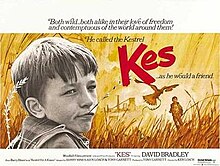
Kes

Kes(1969) is about the life of a boy named Billy set in a working class Yorkshire mining community. It is a hostile world for Billy, his day starts with abuse from his step-brother mostly violent, His divorced mother while trying to make the ends meet have no time to worry about her children. The apathetic school management’s attitude to the children from the working class makes the life even worse. With innocence lost, he is nothing better than a local urchin.

That is when he finds a Kestrel from a nearby farm, a bird known to soar high against the winds. He hides it in his barn and secretly trains the bird for falconry, he names it Kes. His fondness turns into a kind of respect to that bird. The bird’s destiny becomes the crux of Billy’s oppressed life.

Kestrel is quite symbolic here. As Billy explains about his bird to one of his teachers (the one who is more kind and understanding towards him),"This silent bird cannot be petted, but only be manned and yet it never becomes anyone’s slave. It does a favour by allowing its trainer come close to it because the trainer does a favour back by feeding it." Billy empathise himself with the bird, both share a similar hostile environment having to fight to keep up the dignity.

There are many other things that this movie passes by. The abusive nature of Billy brother reflects the frustrations of the work culture in mines. In a very conservative Yorkshire town the attitude of the school management reflects the class divide in the England of 60s. From the sadistic football coach to the bully at the school, the fragile social setup is quite visible subtly under their behaviour. One of the finest movies of Ken Loach which tries to dissect through the lives of working class of post World war England.
The movie is made based on the Novel A Kestral for a Knave by Barry Hines

11.11.11

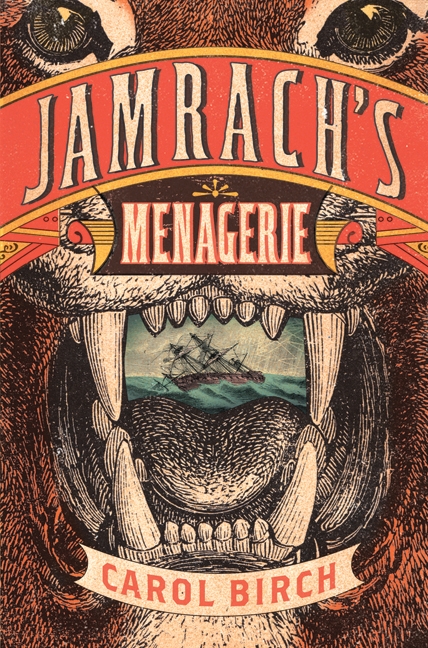
Jamrach's Menagerie by Carol Birch

It tells the story of Jaff and his seafaring friends and their disastrous maritime adventure. Jaff is born in a poor working class slum, and works in a local hotel cleaning the vessels. Once while on one of his walks he falls for a Tiger on loose, that he tries to touch its nose in turn to get caught in its jaws. That simply implies to his fascination for animals, birds and natural history. He says that is when he was born again. Jamrach, an animal collector and an adventurer himself, rescues him and takes him to his unique menagerie of exotic animals and Jaff just finds where he wants to belong. That is when a ship is chartered for Dutch East indies on a mission for Jamrach, and Jaff couldn't resist from signing up for it. Thus begins the ride through the turbulent Atlantic and peaceful Pacific into Dutch East Indies like the good old Jack Sparrow.

They arrive at the Dutch east Indian colony, possibly one of the present Indonesian islands, to capture the dragon(iguanas) and take it back to the ship. Somehow the hell breaks loose after that animal arrives in the ship. A maritime adventure has one thing inevitable, storm and a shipwreck.  I was anyways waiting for that to happen. Now that happened in their return journey to Valparaiso. That journey would test their spirit of comradeship and friendship against instincts for survival as the ship gets caught in a deadly maelstrom and is crushed, leaving them to take refuge in two boats against the violent ocean.  As their supplies starts running out, so does their sanity. When caught in a calamity, somethings have to be forgotten and some unforgivable choices have to be made for the survival of the most. For the survivors it would leave scars irreparable for lifetime.

I first found this book to be in league with children's adventure book and was wondering how it got nominated for Booker. The characters, apart from few important ones, were rather flat and the story proceeds mostly on the strength of narration. Even then the journey and the menagerie of sailors entertained themselves with wit, songs and hope for adventure. But soon, as the tragedy befalls, and the waters started getting murkier, as the adventure ends and horror begins, the mood of the novel turns darker. The final chapters of Part 2 just shies away from sickening the readers while the Part 3 tries to rehabilitate the shattered spirits. The second half of the book somehow reminded me of the "Rime of the Ancient Mariner" by Samuel Taylor Coleridge. "Water water everywhere, not a drop to drink". It is an unforgettable adventure.

3.11.11

Oru Deshathinte Katha

I have finished reading SK Pottekkatt's 'Oru deshathinte katha'(Story of a Village). Jotting down some words about it. To summarize, this is a simple story of a village called Athiranipaadam spanning about 50years narrated mostly from the point of eye of the protagonist of the story Sreedharan. Just like Gabriel Garcia Marquez’s ‘One hundred years of solitude’, SK Pottekkat has created a world out of thin air through this novel consisting of innumerous characters entering and leaving its frame. Story starts with Sreedharan returning to the village he left 30 years ago, from there on as a flash back the story follows the birth of the village Athiranipadam and ends with its death (and a re-birth).

The book could be classified as a autobiographical, dramatic, humorous, tragic, adventurous, romantic, poetic piece of fiction. It is filled with short stories in the form of fables, real incidents, memoirs, history, flash-backs and rumors about all the colorful characters of that village, everyone well connected to the flow of the novel. The characters are very real and there would be someone whom you could always relate to . Their little adventures, romance, fights and grief is what this novel is all about. These stories would ultimately they leave some marks in our hearts, good or bad.

It is a period novel set in pre-independence Kerala and hence the story touches through the Feudalistic culture, incidents like Moplah rebellion, revolutions like gandhian independence struggle, world wars etc. As mentioned above major part of the novel is around the life of Sreedharan, the style of narration matures as he move from his childhood to Adulthood, from his schoolboy mind to a more matured adult. His dislike of mathematics and inclination towards the literatures and poetry later flowers into some fine poems through the novel.

Memories are tastier than imagination. This novel has that taste of memories. Like MT says in Kaadhikante Panippura ‘Stories are the unspeakable pain of writer’s heart’, as SK lets the memories flow out of him through his pen he lets those suppressed emotions also fill into the words. The episodes of Sreedharan’s childhood adventures, ‘Supper Sarkeet’ gang, Krishnanmaster, the Railway signal control room, Kunjappoo’s life, the Kunjikelu Melan’s contemptuous life, Kuloose Parangodan, Ammukutty etc vividly creates an Athiranipadam of imagination in the mind and at the end you will feel that so long you have been living in that village along with all these people.

Written in a very simple and colloquial language, it is a must read!