Showing posts with label review. Show all posts

4.2.13

Books of January

The first one for 2013 was The Postmaster by Rabindranath Tagore. This is a short story collection written while he was still in his youth, mostly from his experiences as a landlord when he had to travel around to collect the rent from tenents. As it says in the introduction, it was the young Tagore all the way, yet those stories seem to extend to eternity, like the wait of that girl in Postmaster, or the presumed meeting of Kabuliwalah with his daughter, and similarly, the people left to themselves in their dilemma. I suppose it was the beginning of his sagely transformation. One could sense some faint hints of disenchantments and detachment brooding in dark corners. The book also packed some poetry as well as fascinating letters he wrote to his niece and friends, brimming with compassionate and wise words. I felt his narrative to be very simplistic and straightforward. I was thinking how apt Tagore's stories are for children for its simplicity.


The second book was The Stranger by Albert Camus. It is a dispassionate first person narrative of a seemingly simple person. He is kind of an outsider to the society and even himself. One might be tempted to call him cold. For instance, he goes to a comedy movie with his girlfriend a day after his mother's funeral. Does that sound odd? Does he not have sorrow? he does. Is it necessary behave so as to show that to the public?, it might appear as misplaced. But here, he loved his mother. Yet, that is what he is. The story takes tragic turns and at each turn we cringe as to why he yield to a prescribed social conduct, even when it is judging him on their misplaced unreason. One might even get annoyed at his complacency. In the afterward, the author tries correlate the protagonist of this story with Christ. But here I didn't feel like he was deliberately acting out that way. I was hoping that author would say that it is perhaps a neural abnormality. A very valid point the story puts through is how someone who doesn't fit into the shoes of the society may be treated with hostility. Rather, it creates panic in the people who follows a certain order, for they know better of its fragility. V (of vendetta) says something interesting as well while tipping off his dominoes.


The Tell-Tale Brain: A Neuroscientist's Quest for What Makes Us Human. Dr Vilayanur Ramachandran is a popular neurologist whose studies on brain and various neural abnormalities have shed light on possible several interesting things that perhaps gives hope in explaining a lot about humanity, and human behavioral and cultural evolution. It also explains several little known aspects of brain. In this book he tries to find how human nature developed in humans, basically through his study on mirror neurons. Also have several interesting writings on Autism, synesthesia, creativity etc. Not only that, he also dwells into things like self-awareness, language, syntax etc, and tries to explain how they all workout in the brain. The book is written in a very humorous way, and I felt non-medical people as well can understand it.
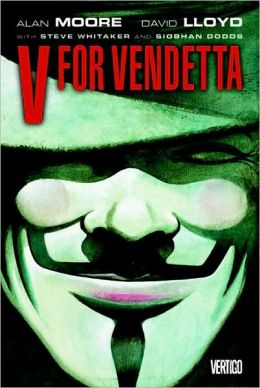
 

V for Vendetta. "Behind this mask there is more than just flesh and blood. Beneath this mask there is an idea... and ideas are bulletproof." Don't have anything much to say about this book. It was just awesome. Story is by Alan Moore and graphics by David Lloyd. Whatever the words couldn’t express, Lloyd has filled with images. The masked man had created a rave after the book was published, and got more popularity with the movie by Watchowski brothers. What I like about V the most is he is masked; he is anonymous, his thoughts are not corrupted by what he maybe. Like he says, he is merely an idea. He doesn’t have an identity, he is thus free. Although I have watched movie umpteen times, I had the same exciting experience reading it. I might as well buy one for my shelf.
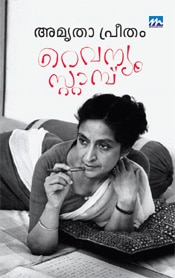
 

റവന്യുസ്റ്റാമ്പ്‌ Revenue Stamp. This is the autobiography of famous Punjabi writer Amrita Pritam. I haven't read any other works of hers. Besides, from what I have read and heard, her life story is perhaps the best place to start. Incidentally I came across this Malayalam version and picked it up. What is so inspiring is her broad mindedness, and a lively outlook towards life, love, friendship and literature. Her recollection of those love affairs and friendships that fueled her creativity, nonetheless were very inspiring. She also recollects the kind of attitude she had to confront from many other contemporary writers. Perhaps a woman writing openly of her thoughts terrified them, made them insecure. One would wish how beautiful it would be to be in company of people who could only speak in the language of art and literature.


Shadow lines by Amitav Ghosh. I liked this purely because of its introspective narrative. I felt genuineness in the concerns, fears and this whole narration of his life singled around the political violence. Loved each character in this book and the way narrator presented them. A self-styled Intellectual and mentor, his Hermione Granger kind of cousin whom he adore, a towering grandmotherly granny and many other family members makes this a very domestic story of families placed in Kolkata and London.  The narratives shift spaces and time erratically, it was consistently narrated as a memoir of this wide eyed boy who isn’t able to emotionally catch up with the families disintegrating and tragedies that they are all trying to come in terms with.


This is the fictionalized account of real story of two young men who, of disappointment in not finding money they expected to steal, brutally murders everyone of a family. But when their story is told, it turns the whole thing awkwardly revolting. Capote's masterpiece shows establishes what fragile society we live in, which is reluctant to accept the responsibilities of the monsters it creates every now and then. At the end, although trial and execution is over, something still lingers on, like a disappointment at how people could have otherwise nothing wrong, tumble senselessly into the abyss of crime.

This book had created a lot of controversy, on capital punishment, on mindless gun usage and also on giving false hopes to the accused from whom Capote had extracted a big part of the story. In the movie 'Capote', this incident is depicted.

3.7.12

War that couldn't end all the wars

In 1914, when the biggest and most horrible of wars that they have witnessed swept across Europe, H.G.Wells remarked that this will be the "War that will end all the wars", perhaps thinking that people would learn something from this war and work towards more peace. This was perhaps the last of the wars that were fought in many aspects. One, the use of military for imperial expansion started getting criticized. The wars to protect "humanity" started becoming more pronounced. The need for reasons to war became more necessary. Second world war had points to justify, it was fought to save humanity and the victims of holocaust still remind us about that.  But for the first world war, they didn't have any answer to those questions. First world war happened at a time when the world was turning itself around. The voiceless started getting voice, the people who were otherwise suppressed were getting empowered to let them be heard in the annals of history. In other words, the usual elites interpretation of wars and its cultural symbols started changing. People started asking why was this war being fought? Soldiers who otherwise never seem to have any significance in any literature or news started getting more importance. So such questions started moulding the nature of wars. League of nations were formed since the great war, which then became the United nations. But, most prominent of all the changes were the de-culturalisation of war. Pulling down all those glossy, heroic stories that inspired countries and kingdoms to war. In other words, the anti-war movements, which were in their nappies, started coming to age.

I was reading few books that incidentally sets itself around the First world war. The first one was a non-fiction called, 'Missing of the Somme'. This was the book that spoke of the aftermath of the Great war. The author travelled through the European cities exploring how the memorials are built and what message does the 'memorialisation' of the war, as projected to the later generations. It was since First world war the anti-war literature started becoming very popular. There were many war-poets and war-writers who wrote of the futility of wars and its brutal consequences and better options. Siegfried Sassoon, Robert Graves etc. are some well-known war poets, they wrote poems from trenches in Belgium, France borders.  The book heavily criticized the way the war is represented, which often being in the custody of warmongers, has only tried to justify their stance. A dead soldier is always a martyr for good cause. I remember a poem from school days where a soldier who was decorated for killing an enemy soldier consciously was awarded death sentence for killing another civilian in a drunken brawl. When you make someone martyr you are actually glorifying the purpose for which he died. A soldier who dies is always given a honour of one who tried to protect the people and safeguard the country thereby justifying the war, whatever be the original reason. 
The above mentioned book explored all the aspects of the Great war that is represented through paintings, sculpture, memorials, literature etc. It talked about sculptures that were commissioned by the governments, which gave a heroic representation of the soldier, then there are other sculptures that shows the other side of the war, of the faceless soldiers, soldiers crying over the body of his best mate, of soldier holding  his dead horse against his chest. The memorials were designed by many well-known architects e.g.. Luyten who had built New Delhi. One of the war memorial built in London is called 'Unknown soldier'. As a post war activity the governements had to ensure proper burial of all soldiers. But the war fronts were sprewn with countless un-identified bodies that it started getting difficult. So they picked whatever they could, the mortal remains of an unknown soldier, and was cremated in the capital city on which the memorial was commissioned. Siegfried Sassoon's and Robert Grave's poems spoke of bloody atmosphere of the war front where the supply is scant, so is ammunitions, poor communication devices, slow yet dedicated medical services and of strange state of humanity that people learn only after they experience hell in person. During the war, the punishment for deserters were death and thousands of youngsters were killed by their own nation because they flee from the war front, from a war that wouldn’t serve any better purpose. It was only recently the governments apologized to their families and gave them honours for volunteering for the war. Jean-Pierre Jeunet's A very long engagement tells the story of a girl trying to find her lover who was sentenced to death for trying to escape.
Another book was the last book of 'Regeneration' trilogy of Pat Barker. That was when the war was described with a bitterness, with a nonchalance that may sound suicidal. It was about a young soldier who was brought from the war front with shell shock, who after his treatment, has to report back at the front. The other character is the doctor of the hospital who has to witness countless causalities and broken down soldiers and try to recuperate them. Another book from the same writer was 'Life Class'. A tale of two youngsters and how a massive force like war impact the idea of love, art and freedom.  It retells the horror of the war through the eyes of one of the protagonist who volunteers as nurse in war front.  Both the novels emphasized on the brutality of the war and its vanity as opposed to the excitement and chivalry that normal war literature give. It was a pointless war, where  people went and died in scores. There wasn't a definite answer to the question as to why was that war fought? Was that the vestiges of imperial strength show that it had to prolong unnecessarily.  In  the narratives, we could feel the hopelessness of a soldier who might very well be walking into his death. That book had received Booker prize in 1995
'Penguin book of First world war stories' was the last one. It was a meticulously arranged collection of short stories told in the backdrop of First world war. It had stories written by Somerset Maugham, Joseph Conrad, Katherine Mansfield, Conan Doyle, Julian Barnes etc. It is arranged into 4 sections  - Stories from the front of which a story called 'Blind' by Mary Borden and A. W. Well's 'Chanson Triste' were incredible, second one was on spies and intelligence used during the first world war - Sherlock Holmes appear in one of them penned by Conan Doyle, At home - this section had stories of people back home, of mothers  waiting for their sons, Hugh Walpole's 'Nobody' was a heart breaking tale of a 16 yr old boy who faked his age to enter the army and was sentenced to death for deserting, and In Retrospect, it was about the impact of war in the future generation. Julian Barnes' 'Evermore' was the best amongst that. The story was an attempt to exorcise the ghosts of un-redeemed soldiers and their stories that got buried under the bigger second world war that eclipsed the first. Christian Caron's movie Joyeux Noel is based on a story from this book, the incident was real though, where on the Christmas days the soldiers from British, French and German fronts defied the higher commands and celebrated the festival together.
In the movie 'Troy' Odysseus tells Achilles "This war will never be forgotten, nor will the heroes who fought in it", but do anyone remember anyone other than Achilles or Odysseus or Hector? , in Baghavad Gita the war was a righteous move to get back what was rightfully theirs, to protect dharma (whatever that means). Is it a dharma of a poor foot soldier to die unnecessary for a feudal war between two arrogant clans of co-brothers over who will own the kingdom? Had those soldiers been given a voice they would have called Mahabharata an epic blunder. If you look at the gods and heroes and legends that people follow or worship there is this war or their violent nature associated with it. There is an embedded heroism in war that still hasn't lost its seductive charm. It shows off patriotism, manliness, heroism etc.  People hate Gandhi for his unmanly non-violence philosophy. And on the contrary adore authoritarians inspired over their megalomaniac tendencies. 

Around 1000+ American soldier died in the last Iraq war, and they were honoured for protecting humanity. That is just like legitimizing the war which was fought for oil companies as something fought for humanity, waged to safeguard the world against mass murdering despotic country. And every dead American was made a martyr, like he died trying to protect his country or even the world. A 100 years ago a country never had to give an excuse to fight wars, but now they have to. So it is the duty of the governments to demonise a country before attacking it. If you read the amount of propaganda materials against Iran, however true or false, one cannot escape a thought on the need of such necessity. In the naxal hinterlands, the brutality of naxalities are measured in terms of number of CRPF jawans or policemen killed. Higher the number more brutal they become. Though they are deployed there to protect the interests of some mining company, their martyrdom makes an impression that they are there to fighting for people. The people back here loves it. To many war is the first step of negotiations. "The rush of battle is a potent and often lethal addiction, for war is a drug" said Chris Hedges in "War is a force that gives us meaning" .  For that reason there is an overt inclination to such violence of huge proportions. The thrill of some poor soldier killing another can always be an incredibly good entertainment for the public, like getting a chance to view their frustrations getting redeemed.  In all the wars perpetrated in democratic nations, the culpability of the public can never be underplayed.  H.G.Wells may have been wrong,  what couldn’t end all the wars started the fire at least.

1.4.12

Writer's Block 3

Writer’s bloc is an annual play writing workshop sponsored by the British council. The idea behind writer’s bloc is to appreciate and promote the writers in an age where the actors or directors try to don the centre space. After the successful completion of the workshop 12 plays were finally born. Writers are all young and energetic. They all portray the contemporary society and its greyness. Rage theatre group, headed by Rajit Kapoor and Shehnaz Patel, organised the Writers Bloc – 3 theatre festival in Mumbai in January this year. Following its success, they are were in Bangalore with 3 of the 12 plays which was showed on 17th, 18th and 19th Feb. They were
 
Spunk!
As the name suggested it was an adult play, humorous and concerning the gender. The synopsis is like, there is a guy who is a wannabe actor in the day and a sperm donor by night. He, as per the experiments and experience, has magical sperm that has only ‘Y’ chromosomes. Which means, he can only give boy child. Next is his business partner – A broke single mother working in a gynaecologists clinic running lucrative male-chromosome business which is actually her main source of income. She doesn’t have to try too hard, most of the couples buckles when they are given a choice of a male child.  They have been running this business smoothly until this chap mistakenly spills his secret during an audition following which the lady who was directing the audition starts stalking him, and needless to say he falls for her and to the first lady’s dismay that impacts their business drastically. Things soon goes out of control as we see the darker side of all fantasies leading to a tragic ending. This pokes at the latent weakness when it comes to gender when they are given a choice. And how, the smell of money can drive people to the boundaries where something harmless whilst illegal start become vulgar and uncontrollable. Apart from this bit there had been several scenes that just adds to the humour and flow of the play and nothing more. Like the story of the second girl was rubbish, like she is unhappy and consults a spiritual guru who points her to this chap with a prediction that only he can make her happy. They were hilarious and as a story they all gelled well and was hilarious and entertaining. But there wasn’t anything take away idea from them. Needless to say all the crew were exceptional. The play was written by Siddharth Kumar and was directed by Akarsh Khurana
 
Pereira's Bakery on 76 Chapel Road
This is the story of a street in Bandra and the people living there and how their life is affected when they are served eviction notice to allow a multi layer parking lot for the new shopping mall , by demolishing their house. Story revolves around Pereira, his family and friends and his bakery that was started by his grandfather and is now part of his family legacy. The story initially resembled the Malayalam movie ‘Vietnam Colony’, an employee from the construction company befriending Pereira’s daughter and influence them to comply with the company’s wishes. But play didn’t take the route of fantasy that movie imagined. The reality is bleaker than what we would expect. The unending piling and demolition, harassment from the land owner and construction company, betrayal of friends and communities strain the bonds of friendship and tests the endurance of humanity before the weak finally succumbing to the onslaught of the powerful ones. The play wasn’t that bleak, it was humorous. The characters were very lively and witty. Even till the last minute there were enough stuff to tickle the funny bone, even when we see them bearing and battling all that with their little vanity and heroism. People can relocate, but legacies cannot. They simply get buried under the rubbles. This subject, though had been written about, movies made, plays enacted, there is always a gap. A gap which a person who really get uprooted from their homes and the reader or viewer who tries to get into their shoes and feel it. This play too fails to give the proper impact. The bigot society needs a much stronger pinch to feel how it is to bear someone arguing why they should give up their existence for an ill-quantified economic development of unknown people. The set was the key thing in this play, they had built a two storey scaffolding to put the play and that was incredible. This play was written by Ayesha Menon and was directed by Zafar Karachiwala.
 
Mahua
A tribal joke goes like this “Heaven is a forest full of Mahua trees, and hell is a forest full of Mahua trees with a forest guard”. Mahua in its positive and negative impacts are shown as a central symbol to the tribal traditions of Orissa. It says Mahua trees make them feel like home. For gents, Mahua means liquor. The story takes us into the life of few tribals and their struggle to live in the world where they are not sure when they would be evicted for minerals, or be bombed by the army testing camps in one of their testing mistakes or be rounded up for being a maoist sympathiser. The play was in Hindi, raw with ample use of expletives. The story goes like this, Birsa, an ordinary chap from the village of Bihabund is caught for shooting arrow onto an old man from the adjacent village. The punishment the panchayat pronounce is to marry Birsa to Gilli, that old man’s unmarried daughter who is 12 years elder than Birsa!. Mahua flows and the marriage woes and other funny moments takes us into their life. But the cement companies have now got the rights to mine and the villagers have to relocate. Their struggle to oppose the move,  is suppressed with state sponsored violence. One friend joins the company seeking comfort while the other gets recruited by Maoists. Birsa and Gilli relocates to the new unknown corrosive terrain into the devilish toxic testing grounds that shakes their hut and life. As life gets more difficult, they get into smuggling unexploded arms. When one night a test bomb finds their already dilapidated hut as target, Gilli is wounded and bedridden.  Their misery worsened and death was the only thing they wished for. The writer of the play, Akash Mohimen drew his inspiration from the article from P.Sainath’s ‘Everybody loves a good drought’. It was about the tribals who were evicted for a limestone mine from their villages and rehabilitated in a wasteland in the middle of Army’s arsenal testing camps. The issue is a big question mark to the ideals boasted by the nation, and to disfigured face of humanity in this country that has made it a habit to view everything through the concept of development. The play ends with a soul stirring folk song of Kheria tribe which translates to this:
 
In the region of Hamko-Simko,
There came together the tribals of the forest.
Against the king and queen,
Against the taxes, they did protest.
 
There was no fight, there was no war,
As the queen ordered the soldiers to fire into the crowd.
Red blood flowed over, across the soil;
As the gunshots and cries, grew equally aloud.
 
They brought in motor trucks in large numbers,
And in them the bodies were loaded.
They took them to seeming,
And to Riaboda they were carried.
Until in Baamana a grave was dug,
And back into their beloved earth they were buried.
 
It was great. The plays were all original. It shows the emergence of new wave of Indian playwrights who are concerned with the social and political state of events. These writers are all youngsters, doing theatre as part time. The idea of promoting writers through such festivals makes this even better. I guess they would be bringing the remaining 9 plays too to Bangalore in instalments.

20.1.12

Born into Brothels

Sonaguchi is a notorious red light area of Kolkata. Prostitution, abuse, drugs and many other evils had been thriving in the dark alleys of that slum. The most unfortunate ones of that slum are the innocent children on whom society have stamped the seal of outcasts. This is the story of eight children from this brothel, their lives, their fears, their likes, their dislikes and how through the efforts of two documentary photographers, for the first time, they starts to dream of a freedom from a curse that has been tagged on them from birth.

Zana Briski is a professional photographer and a social activist mainly working for towards empowering women and creating awareness of the condition and exploitation faced by women throughout the world. That is how she learns about the infamous red-light area of Kolkata. She travels to Kolkata to work with the local NGOs and take the photographs of the lives of people particularly women and children in these areas. But as a photographer it never worked out as she cannot go inside the slums and their homes to capture the very day to day life, most of them would shy away from an outsider who has come to photograph them.

During her stay she had to interact with many children of the prostitutes, from that interaction she thinks of teaching them some photography in return for the pictures that they take inside the slums. They  wouldn’t have any inhibitions to go to any dark corner of the slums, nor does the people bother some kids having time pass. Many drops out and finally the group closes to a bunch of eight children who were completely smitten over the art of photography. They would come to her house daily and there she would teach them the basics of photography, composition tips, post processing etc, then she would give them a camera and assignments to go into the brothels and come back with pictures. Soon she comes very close to these kids and there starts her mission to find out some way to save these kids from the brothels, particularly the girls whose destiny is otherwise the brothels of Sonaguchi. She and her friend Ross Kaufmann chronicle their experiences in Slums, the lives of the children, and their struggles to find a rehabilitation for these children as documentary.


The documentary is mainly in Bengali with English subtitles. The sight of the slum and the living condition of the people are sickening, yet the enthusiasm of the children over small small happiness could give heart aches. The first half of the documentary shows the lives of the children and their family. It follows the children as they run around taking snaps of the unawares, and showcasing some of the classic pieces of street photography captures by their eyes. They interviews the children, who talks about the kind of lewd questions the people ask them and their fear of falling into the profession the society have already thought for them.

Most of the families have been involved in pimping and prostitutions for generations and in such a tied up world apparently breaking away is a very difficult task. One of the girl Suchitra’s aunt had already received advance for transporting her to Mumbai. The boys don’t have that much fear as girls. One of the boy Gaur is determined to break out, as he says the future of the girls born there are in the worst waters. Now Zana and Ross have a task at their hands. Later part is mainly around how Zana and few friends try to rehabilitate these children through photo exhibitions and giving them recognitions in a wider society. Amnesty, UNICEF etc are few of the NGOs who have bought their pictures for calendars and awareness. They struggle in getting the parents convinced about the future of the children and few of them react positively, then she gets formalities sorted out of the labrynths of govt public service departments, speaks to various rehabilitation centers.
 

The documentary ends with the successful rehabilitation of few children and with a hope to continue this forward to other children.  One of the boys, Avijith, gets invited to attend the World press photography workshop in Amsterdam (only 9 children are chosen from across the globe!). They have opened an organisaton called Kids with Camera in Kolkata and couple of other places. The struggle for saving the children are still going on. This documentary can be viewed in various perspectives, from a child welfare, child empowerment, social isolations even street photography. A child is a raw gold, highly malleable, breakable, but pure, innocent. Our ears should hear every child’s cry, but they don’t!
 
This feature won the Academy award for the best documentary in 2004
More details:
http://en.wikipedia.org/wiki/Born_into_Brothels
http://kids-with-cameras.org/calcutta/

14.1.12

Boy with a Suitcase

Rangashankara from Bangalore and Schnawwl theatre group from Germany has come up with a very beautiful play Boy With a Suitcase, about the journey of a boy with a red suitcase from his war ravaged home seeking an asylum in London. The play is based on the story by Mike Kenny and was directed by Andrea Gronemeyer. The cast includes a mixture of German and Indian actors. The play completed a successful run in Germany and reached Rangashankara last August where it ran successfully for a week .

The story starts with Naz, a 12 year old Asian boy, along with his mother and father fleeing their home following a devastating war and ending up in a refugee camp. But from here Naz has to travel alone through treacherous world of bandits, wild animals, human traffickers, sex traffickers & smugglers, to London where his sister lives. His mother arranges for Naz’s escapade through a human trafficker by selling everything that she has, including herself. All that he has to accompany him is a red suitcase filled with memories of his home, and the treasure trove of stories that his mother had told him.
 
Leaving behind his mother and father, the heartbroken Naz finds company - an east European girl who too has reasons to flee, along with whom he escapes the bandits who try to rob them on the way, and the wolves as they try to cross the dangerous mountains. Their journey takes them to a city where an illegal immigrant meant easy target for sex trade or bonded labour . While escaping a pimp, the two ends up under the doorsteps of a crony clothes factory owner who threatens them to be sent back to their homes if they do not oblige and work in the factory. Trapped for over two years, they finally manage to escape with his money and flee to their destination. But would they find heaven, ultimately?

A very well executed play, with beautiful technical side to back especially the music dept which is covered by the co-actors themselves.  I felt the music, which ranged from guitars to very crude flapping aluminium sheets, recreated the environment and situations very aptly. The play interleaves several tiny beautiful stories with the situation. Often inspiring an adventure while sometimes sober to sit and think or humorous to make things light, Naz always has some story to tell. This story itself is partially narrated by the adult Naz as a memoir, like a children’s fairy tale, underplaying the misery of immigrants’ and refugees’ lives. And all the while, as Naz imagines his voyage as Sinbad’s and all the adverse situations as challenge, we discover more poignant meaning of the endurance of humanity.

12.11.11

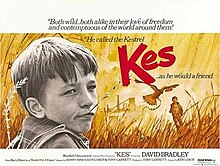
Kes

Kes(1969) is about the life of a boy named Billy set in a working class Yorkshire mining community. It is a hostile world for Billy, his day starts with abuse from his step-brother mostly violent, His divorced mother while trying to make the ends meet have no time to worry about her children. The apathetic school management’s attitude to the children from the working class makes the life even worse. With innocence lost, he is nothing better than a local urchin.

That is when he finds a Kestrel from a nearby farm, a bird known to soar high against the winds. He hides it in his barn and secretly trains the bird for falconry, he names it Kes. His fondness turns into a kind of respect to that bird. The bird’s destiny becomes the crux of Billy’s oppressed life.

Kestrel is quite symbolic here. As Billy explains about his bird to one of his teachers (the one who is more kind and understanding towards him),"This silent bird cannot be petted, but only be manned and yet it never becomes anyone’s slave. It does a favour by allowing its trainer come close to it because the trainer does a favour back by feeding it." Billy empathise himself with the bird, both share a similar hostile environment having to fight to keep up the dignity.

There are many other things that this movie passes by. The abusive nature of Billy brother reflects the frustrations of the work culture in mines. In a very conservative Yorkshire town the attitude of the school management reflects the class divide in the England of 60s. From the sadistic football coach to the bully at the school, the fragile social setup is quite visible subtly under their behaviour. One of the finest movies of Ken Loach which tries to dissect through the lives of working class of post World war England.
The movie is made based on the Novel A Kestral for a Knave by Barry Hines

11.11.11

Jamrach's Menagerie by Carol Birch

It tells the story of Jaff and his seafaring friends and their disastrous maritime adventure. Jaff is born in a poor working class slum, and works in a local hotel cleaning the vessels. Once while on one of his walks he falls for a Tiger on loose, that he tries to touch its nose in turn to get caught in its jaws. That simply implies to his fascination for animals, birds and natural history. He says that is when he was born again. Jamrach, an animal collector and an adventurer himself, rescues him and takes him to his unique menagerie of exotic animals and Jaff just finds where he wants to belong. That is when a ship is chartered for Dutch East indies on a mission for Jamrach, and Jaff couldn't resist from signing up for it. Thus begins the ride through the turbulent Atlantic and peaceful Pacific into Dutch East Indies like the good old Jack Sparrow.

They arrive at the Dutch east Indian colony, possibly one of the present Indonesian islands, to capture the dragon(iguanas) and take it back to the ship. Somehow the hell breaks loose after that animal arrives in the ship. A maritime adventure has one thing inevitable, storm and a shipwreck.  I was anyways waiting for that to happen. Now that happened in their return journey to Valparaiso. That journey would test their spirit of comradeship and friendship against instincts for survival as the ship gets caught in a deadly maelstrom and is crushed, leaving them to take refuge in two boats against the violent ocean.  As their supplies starts running out, so does their sanity. When caught in a calamity, somethings have to be forgotten and some unforgivable choices have to be made for the survival of the most. For the survivors it would leave scars irreparable for lifetime.

I first found this book to be in league with children's adventure book and was wondering how it got nominated for Booker. The characters, apart from few important ones, were rather flat and the story proceeds mostly on the strength of narration. Even then the journey and the menagerie of sailors entertained themselves with wit, songs and hope for adventure. But soon, as the tragedy befalls, and the waters started getting murkier, as the adventure ends and horror begins, the mood of the novel turns darker. The final chapters of Part 2 just shies away from sickening the readers while the Part 3 tries to rehabilitate the shattered spirits. The second half of the book somehow reminded me of the "Rime of the Ancient Mariner" by Samuel Taylor Coleridge. "Water water everywhere, not a drop to drink". It is an unforgettable adventure.

3.11.11

Oru Deshathinte Katha

I have finished reading SK Pottekkatt's 'Oru deshathinte katha'(Story of a Village). Jotting down some words about it. To summarize, this is a simple story of a village called Athiranipaadam spanning about 50years narrated mostly from the point of eye of the protagonist of the story Sreedharan. Just like Gabriel Garcia Marquez’s ‘One hundred years of solitude’, SK Pottekkat has created a world out of thin air through this novel consisting of innumerous characters entering and leaving its frame. Story starts with Sreedharan returning to the village he left 30 years ago, from there on as a flash back the story follows the birth of the village Athiranipadam and ends with its death (and a re-birth).

The book could be classified as a autobiographical, dramatic, humorous, tragic, adventurous, romantic, poetic piece of fiction. It is filled with short stories in the form of fables, real incidents, memoirs, history, flash-backs and rumors about all the colorful characters of that village, everyone well connected to the flow of the novel. The characters are very real and there would be someone whom you could always relate to . Their little adventures, romance, fights and grief is what this novel is all about. These stories would ultimately they leave some marks in our hearts, good or bad.

It is a period novel set in pre-independence Kerala and hence the story touches through the Feudalistic culture, incidents like Moplah rebellion, revolutions like gandhian independence struggle, world wars etc. As mentioned above major part of the novel is around the life of Sreedharan, the style of narration matures as he move from his childhood to Adulthood, from his schoolboy mind to a more matured adult. His dislike of mathematics and inclination towards the literatures and poetry later flowers into some fine poems through the novel.

Memories are tastier than imagination. This novel has that taste of memories. Like MT says in Kaadhikante Panippura ‘Stories are the unspeakable pain of writer’s heart’, as SK lets the memories flow out of him through his pen he lets those suppressed emotions also fill into the words. The episodes of Sreedharan’s childhood adventures, ‘Supper Sarkeet’ gang, Krishnanmaster, the Railway signal control room, Kunjappoo’s life, the Kunjikelu Melan’s contemptuous life, Kuloose Parangodan, Ammukutty etc vividly creates an Athiranipadam of imagination in the mind and at the end you will feel that so long you have been living in that village along with all these people.

Written in a very simple and colloquial language, it is a must read!

7.4.11

Travelling south Asian film festival @ NGMA

Travelling south Asian film festival had been going around in the National gallery of Modern art in Bangalore for few weekends. This festival features some of the documentary from different parts of south Asia involving travelling and culture. I managed to attend three screenings last weekend, three totally different subjects.

Come to My Country: Journeys with Kabir and Friends: This was the documentary of three people, one is Prahladji, a teacher from Malwa district in MP, whose passion lies in travelling around with this troupe and his tambourine, and singing the Kabir songs in various gatherings; the second is Linda Hess a scholar who is teaching Kabir’s poems and songs in Stanford University for humanities students and the third is the director herself, Shabnam Virmani. First half is basically about the life of Prahladji and Linda. At times the documentary seemed to go overboard with spirituality and all those hoo-ha about Indian culture, but it soon gets back into the mainstream of Kabir songs. Linda Hess was at times boring! Prahaladji and his wife were wonderful simple individuals, very innocent, frank and witty. I loved their part .They journey together from their individual worlds to various places in search of friends of Kabir. On their way to and inside Banaras and later US, they meet many ‘fans’ of Kabir, including crooked saints and spends the time singing and contemplating the verses of Kabir discussing social issues prevailing in various parts of the country and world. Their discussions and disagreements over various aspects were very interesting. And Kabir’s poems are like arrows.

Saamam: This was a Malayalam documentary by Ramachandran K about MDR (MD Ramanathan), a carnatic musician and vocalist who used to sing at high octaves which is considered a very difficult thing and something which nobody often attempt. With booming voice he sings most of the recitals very slowly giving ample time for each words adding his own expressions into it. He was the disciple of Tiger Varadachariar another high octave singer whose got ‘Tiger’ attached to his name because at his high octave sound that almost turns into slow growls of a tiger! That was their uniqueness and also something that didn’t let them become popular vocalists. Many people didn’t find such high octaves pleasing to hear due to the growling gruff sound of it. But his followings and disciples are popularizing this through various mediums. Documentary featured Sanjay Subramaniam, Sreevalsan J Menon etc

The Salt Stories: This is a documentary by Lalit Vachani who takes a trip from Sabarmathi to Dandi, following Gandhiji’s path traversing through the villages where Gandhiji had halted on his way to break the salt law of British imperialism which would then ignite the non-cooperation movement. On his journey he meet various people from different human created strata of the society divided and ghettoised by caste, class and religion. It goes beyond the glossy and shining image of ‘vibrant’ Gujarat and does a profit-loss calculation of the development - How the SEZ culture is uprooting people from their villages, how the no-slum policy is mere aiming to bring down the slums without providing adequate rehabilitation to the people. He talks with many people, he met on way,- village heads, his own production controller and cameraman and some self proclaimed Gandhians who where revered elsewhere, about the slum clearance, communal riot, caste issue etc and is shocked and saddened when he finds that most of them happens to support the system and prevailing acute castes and communal despise . Some relief comes in the form of those inspiring individuals who had been fighting against the odds of the society, like the folks from Napa village which didn’t get affected by the post-Godhra violence, Ketanbhai - a progressive corporator, the salt farmer of Dandi, the people working towards the justice for forcefully evicted people and many similar individuals. It was a very poignant documentary which tried to tell what the real face of development is, which is pretty much the case of most of the upcoming states. At the end when the credits roll down, the pricking question as to what should take the priority – Social development for all or economic development for the benefit of few, lingers in the mind.

Mayomi: Mayomi was a documentary feature from Sri Lanka, showing the life of one of the Indian Ocean Tsunami victim, Mayomi's, life in the post LTTE Sri Lanka. Her husband was in navy, and was killed in a fight against LTTE and her mother died in the tsunami disaster that left many dead and thousands homeless. This feature showed how she was trying to cope up with taking care of her brother's son and her own ailing father, and at the same time struggling to get the new house allocated, as per the Tsunami relief, by roaming through the corrupt corridors of bureaucracy. To add to her troubles, her brother is a habitual offender and is another burden for her. The documentary was tad boring as it failed to evoke the true emotions of being homeless for years.

This coming weekend there are few movies being shown as part of this festival

6.4.11

"Raavan" - Mani Ratnam's Maoist Ramayan

Mani Ratnam has been one of the film-makers who has keenly worked on portraying certain social realism in movies that are often very relevant to that period.. His movies are often woven on layers of different themes that are encountered by the plot as it thickens. For instance, Roja was made during the dark periods of Kashmiri insurgency where behind the love story lied the harsh realities of extremism and the emotions of the perpetrators as well as the victims, while in Bombay he explored the communal riot that broke loose following the Babari Masjid issue and the possibility of triumph of humanity over communal forces. Each of these movies had a firm layer on which he casted his story. In Raavan he uses the ongoing war between law and outlaws in the dense tribal zones of this country. He tackles the story from the point of view of three characters mainly. They each represent a party in the whole drama

Characters
Dev: The civilized, ambitious police officer assigned to maintain the law and order. Doesn't realises the crimes being committed by the officers from his group. Becomes the Law that apparently created lawlessness. He is the embodiment of the power that Law allows, his actions will be deemed as legal whatsoever be the means he take.
Raagini: Legally married to Dev, leads a happy married life. She believes Dev is police, legal and good while Beera to be outlaw, illegal and bad. She never realised the atrocities committed by the police. Her realisation of what is good and bad, what is legal and illegal, who is Raam and who is Raavan is a statement to us. She, very well, represents the 'People', who attaches itself to the legal side of the world. The one who is persistent in believing what outlaw does is wrong and what law does is right. She is ill-informed about the crimes committed by state. She is the one who has to take the fire test of loyalty at the end and decide who is right and who is wrong.
Beera/Veera/Raavan: The stylish, outlaw. His war is against the law. He is the saviour of the tribal, the master of guerilla warfare. He seeks revenge against the crimes committed against the innocents in the name of law and order. He represent all the forces resisting the law.

Ramaraavanan.
The main theme of the movie was the fights between the good and the bad. Dev and Beera are the two poles, their destiny is interlinked. They doesn't change, they are how they were and wouldn't escape their definite destiny. So what is the relevance of this theme? As the movie tag lines suggest, Is there a Ram in Raavan, is there a Raavan in Ram? Who will decide which of the two are what. Raagini forms the epicenter of the movie, the movie starts with a Raagini and ends with a different one. She transforms as she comes to know about the stories at the other end. The clouds depart, sky becomes clear. Finally she was able to decide. Going back the theory, People have many pre-concieved notions about the world. We read, discuss, apply logic but finally we do come up with some presumptions on various aspects. We trust the sources to be true, but are they always true? What if the things that you believed to be true was in fact a lie? Do we always get to see things from a bird's view? Was Ram really a good person?

Tribal world
The canvas on which the movies is drawn is a tribal world in the middle of a jungle. The hostile, humid, forest and its children who had been living closely for decades or centuries. The movie brings out the beauty to its fullest thanks to the directors of photography. It shows how isolated are these cultures from the rest of the country. There is an instance When Beera's brother bring food for Ragini which she declines with a sense of disgust, is  offended and he tells her that what she just refused is what they eat everyday. They are self-sufficient, they don't want big big things, they wouldn't even know what salary is let alone cribbing over it, they don't want pizza huts or shopping malls or multiplexes. World is not enough for whom, then? Tribal zones appears to have caught the attention for past couple of years. Tribal zones of Orissa, Chattishgargh, Jharkhand, Andhra, Karnataka are all targeted by big Industrialists. Attappady tribal zone has been in their radar following the geological survey reporting the possibility of gold reserves in the hills. Numerous tribal have already been evacuated for various projects. To them it is like expelling from their country. No one bothers doing some maths to assess the gain against the loss.

Ramayana
Ramayana is one of the popular epics of India, apart from that it is considered a holy epic. Ramayana is explained to the current world with a lot of disclaimers that is enforcing the reader to keep in mind that Rama is an avatar of Vishnu and Sita is the Avatar of Bhoomidevi,  to consider anything that is explained in the text to be gods will so as to prevent any logical questioning on the illogical things. Questioning the episodes like killing of Bali, Asking Sita for purity test, Humiliation of Shoorpanekha, Forcing Sita to exile, conducting Ashwamedham to expand the kingdom etc., though seemingly ungodly, could be considered blasphemy. Such epics have only one ending Gods win, Demons loose. It is very much the same in the reality.The fight between rights and wrongs will go on till the extinction of humanity, the question is how do you decide on which side you are. Beeras will die. Law always win the war. Everything comes back to normal, except Raagini. If at all there is any meaning to all the war that should be the one word - Change.

Hovering over the technicalities and faults
Raavan was one of the outstanding movies featuring subtle use of camera and technology. Camera and the background music blends with the ethos of the environment. The movie is a treat to the eyes of those who love the greenery, water bodies and the lingering dampness of evergreen forests. Talking about the shortcomings of the movie, the editing department had to look into the abrupt usage of scissors through the flow. Most of he scenes are short, due to which the director is not able to sustain the relevance of characters between scenes. If bad editing is indeed the case then they should realise it and bring out a director's cut version when they release the dvds. Lousy casting would be the next point, Mani Ratnam should realise that his signature on the movie is well understood amongst the movie lovers. He could have employed any new face in the movie and still people would come to watch the movie with the same enthusiasm
.All in all, there is something to ponder on the back of this movie. Not the lousy love story, but something more serious.