14.1.12

Boy with a Suitcase

Rangashankara from Bangalore and Schnawwl theatre group from Germany has come up with a very beautiful play Boy With a Suitcase, about the journey of a boy with a red suitcase from his war ravaged home seeking an asylum in London. The play is based on the story by Mike Kenny and was directed by Andrea Gronemeyer. The cast includes a mixture of German and Indian actors. The play completed a successful run in Germany and reached Rangashankara last August where it ran successfully for a week .

The story starts with Naz, a 12 year old Asian boy, along with his mother and father fleeing their home following a devastating war and ending up in a refugee camp. But from here Naz has to travel alone through treacherous world of bandits, wild animals, human traffickers, sex traffickers & smugglers, to London where his sister lives. His mother arranges for Naz’s escapade through a human trafficker by selling everything that she has, including herself. All that he has to accompany him is a red suitcase filled with memories of his home, and the treasure trove of stories that his mother had told him.
 
Leaving behind his mother and father, the heartbroken Naz finds company - an east European girl who too has reasons to flee, along with whom he escapes the bandits who try to rob them on the way, and the wolves as they try to cross the dangerous mountains. Their journey takes them to a city where an illegal immigrant meant easy target for sex trade or bonded labour . While escaping a pimp, the two ends up under the doorsteps of a crony clothes factory owner who threatens them to be sent back to their homes if they do not oblige and work in the factory. Trapped for over two years, they finally manage to escape with his money and flee to their destination. But would they find heaven, ultimately?

A very well executed play, with beautiful technical side to back especially the music dept which is covered by the co-actors themselves.  I felt the music, which ranged from guitars to very crude flapping aluminium sheets, recreated the environment and situations very aptly. The play interleaves several tiny beautiful stories with the situation. Often inspiring an adventure while sometimes sober to sit and think or humorous to make things light, Naz always has some story to tell. This story itself is partially narrated by the adult Naz as a memoir, like a children’s fairy tale, underplaying the misery of immigrants’ and refugees’ lives. And all the while, as Naz imagines his voyage as Sinbad’s and all the adverse situations as challenge, we discover more poignant meaning of the endurance of humanity.

12.11.11

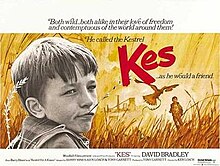
Kes

Kes(1969) is about the life of a boy named Billy set in a working class Yorkshire mining community. It is a hostile world for Billy, his day starts with abuse from his step-brother mostly violent, His divorced mother while trying to make the ends meet have no time to worry about her children. The apathetic school management’s attitude to the children from the working class makes the life even worse. With innocence lost, he is nothing better than a local urchin.

That is when he finds a Kestrel from a nearby farm, a bird known to soar high against the winds. He hides it in his barn and secretly trains the bird for falconry, he names it Kes. His fondness turns into a kind of respect to that bird. The bird’s destiny becomes the crux of Billy’s oppressed life.

Kestrel is quite symbolic here. As Billy explains about his bird to one of his teachers (the one who is more kind and understanding towards him),"This silent bird cannot be petted, but only be manned and yet it never becomes anyone’s slave. It does a favour by allowing its trainer come close to it because the trainer does a favour back by feeding it." Billy empathise himself with the bird, both share a similar hostile environment having to fight to keep up the dignity.

There are many other things that this movie passes by. The abusive nature of Billy brother reflects the frustrations of the work culture in mines. In a very conservative Yorkshire town the attitude of the school management reflects the class divide in the England of 60s. From the sadistic football coach to the bully at the school, the fragile social setup is quite visible subtly under their behaviour. One of the finest movies of Ken Loach which tries to dissect through the lives of working class of post World war England.
The movie is made based on the Novel A Kestral for a Knave by Barry Hines

11.11.11

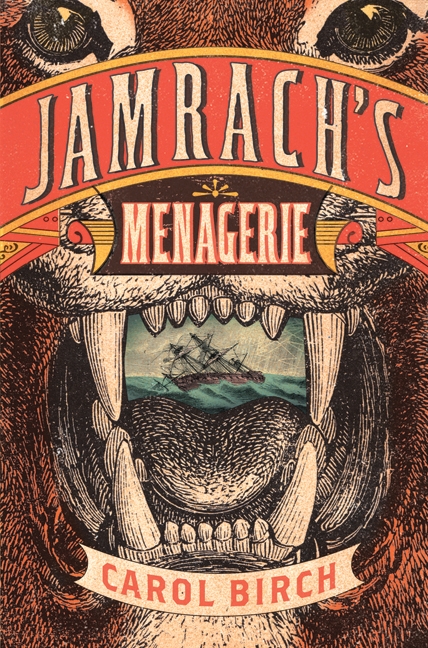
Jamrach's Menagerie by Carol Birch

It tells the story of Jaff and his seafaring friends and their disastrous maritime adventure. Jaff is born in a poor working class slum, and works in a local hotel cleaning the vessels. Once while on one of his walks he falls for a Tiger on loose, that he tries to touch its nose in turn to get caught in its jaws. That simply implies to his fascination for animals, birds and natural history. He says that is when he was born again. Jamrach, an animal collector and an adventurer himself, rescues him and takes him to his unique menagerie of exotic animals and Jaff just finds where he wants to belong. That is when a ship is chartered for Dutch East indies on a mission for Jamrach, and Jaff couldn't resist from signing up for it. Thus begins the ride through the turbulent Atlantic and peaceful Pacific into Dutch East Indies like the good old Jack Sparrow.

They arrive at the Dutch east Indian colony, possibly one of the present Indonesian islands, to capture the dragon(iguanas) and take it back to the ship. Somehow the hell breaks loose after that animal arrives in the ship. A maritime adventure has one thing inevitable, storm and a shipwreck.  I was anyways waiting for that to happen. Now that happened in their return journey to Valparaiso. That journey would test their spirit of comradeship and friendship against instincts for survival as the ship gets caught in a deadly maelstrom and is crushed, leaving them to take refuge in two boats against the violent ocean.  As their supplies starts running out, so does their sanity. When caught in a calamity, somethings have to be forgotten and some unforgivable choices have to be made for the survival of the most. For the survivors it would leave scars irreparable for lifetime.

I first found this book to be in league with children's adventure book and was wondering how it got nominated for Booker. The characters, apart from few important ones, were rather flat and the story proceeds mostly on the strength of narration. Even then the journey and the menagerie of sailors entertained themselves with wit, songs and hope for adventure. But soon, as the tragedy befalls, and the waters started getting murkier, as the adventure ends and horror begins, the mood of the novel turns darker. The final chapters of Part 2 just shies away from sickening the readers while the Part 3 tries to rehabilitate the shattered spirits. The second half of the book somehow reminded me of the "Rime of the Ancient Mariner" by Samuel Taylor Coleridge. "Water water everywhere, not a drop to drink". It is an unforgettable adventure.

3.11.11

Oru Deshathinte Katha

I have finished reading SK Pottekkatt's 'Oru deshathinte katha'(Story of a Village). Jotting down some words about it. To summarize, this is a simple story of a village called Athiranipaadam spanning about 50years narrated mostly from the point of eye of the protagonist of the story Sreedharan. Just like Gabriel Garcia Marquez’s ‘One hundred years of solitude’, SK Pottekkat has created a world out of thin air through this novel consisting of innumerous characters entering and leaving its frame. Story starts with Sreedharan returning to the village he left 30 years ago, from there on as a flash back the story follows the birth of the village Athiranipadam and ends with its death (and a re-birth).

The book could be classified as a autobiographical, dramatic, humorous, tragic, adventurous, romantic, poetic piece of fiction. It is filled with short stories in the form of fables, real incidents, memoirs, history, flash-backs and rumors about all the colorful characters of that village, everyone well connected to the flow of the novel. The characters are very real and there would be someone whom you could always relate to . Their little adventures, romance, fights and grief is what this novel is all about. These stories would ultimately they leave some marks in our hearts, good or bad.

It is a period novel set in pre-independence Kerala and hence the story touches through the Feudalistic culture, incidents like Moplah rebellion, revolutions like gandhian independence struggle, world wars etc. As mentioned above major part of the novel is around the life of Sreedharan, the style of narration matures as he move from his childhood to Adulthood, from his schoolboy mind to a more matured adult. His dislike of mathematics and inclination towards the literatures and poetry later flowers into some fine poems through the novel.

Memories are tastier than imagination. This novel has that taste of memories. Like MT says in Kaadhikante Panippura ‘Stories are the unspeakable pain of writer’s heart’, as SK lets the memories flow out of him through his pen he lets those suppressed emotions also fill into the words. The episodes of Sreedharan’s childhood adventures, ‘Supper Sarkeet’ gang, Krishnanmaster, the Railway signal control room, Kunjappoo’s life, the Kunjikelu Melan’s contemptuous life, Kuloose Parangodan, Ammukutty etc vividly creates an Athiranipadam of imagination in the mind and at the end you will feel that so long you have been living in that village along with all these people.

Written in a very simple and colloquial language, it is a must read!

17.9.11

The Hunger

On the wake of Anna Hazare’s Hunger strike, I happened to see a movie on another hunger striker, Bobby Sands. "Hunger", directed by Steve McQueen, depicts a real life story of IRA revolutionary Bobby Sands as he, along with other prison inmates, goes on indefinite hunger strike to protest against the English occupation of Northern Ireland and the denial to give political status to the IRA prisoners. The movie covers the days of “blanket and no wash” protest and the subsequent indefinite hunger strike. The hunger strike and subsequent death of 9 prisoners including Bobby Sands lead to a worldwide protest and condemnation of Margaret Thatcher’s policies and lead to a new wave of Irish nationalism.
 
The main theme of the movie is still Hunger, which is also metaphorically used as hunger for freedom. The movie explores the psychology behind the human will power to fight against the needs of his own body. With very little, and hard hitting, dialogues, the movie is slow and unnerving as it passes through the silent harrowing moments. As said, the monotony of solitary confinements doesn't spare the viewers as well. In the movie “Fight Club”, there is a dialogue which runs as “How do you know yourself if you have not got yourself into a fight”. In that movie, it shows the fight against one’s own body lead to a strange sense of liberation.  I believe same works out for hunger strikers, mainly because that becomes the ultimate weapon he/she can use to demonstrate their protests.  I somehow feel that such defiance increases the courage to continue, which is probably what encourages them to push their limits further. There are people who have attempted violent suicides, hoping for a painless quick death. Then there are people like this, deterministic on the slow death unwavering from their position despite being self aware of the state.
 

There is an interesting conversation between Bobby Sands and the Father Dominic Moran, who was called in to dissuade him from the strike. That scene, about 20 mins long, was shot in a single go, and comes up suddenly after an hour or so without any dialogues.   Michael Fassbender, who plays the role of Bobby Sands, went through a crash diet for the final part of the movie. The painful final minutes were indeed well enacted and picturised. The movie never tries to take sides. There is a scene where an IRA man comes and shoots a police man, in cold blood, inside an old age home when the policeman was talking to his aged mother, in front of her. It also tries to look at the conditions of policemen and wardens of the prison and how life becomes unsettling amidst riots and death threats.
 
After the success of various hunger strikes this has apparently become a favourite tool against establishments. Many bogus hunger strikers have emerged in political circle. Though many hunger strikes assumes the cloak of non-violence, there are always a threat of unprecedented violence on the event of the death of the striker. LTTE leader Thileepan, when IPKF was brought in, went ahead with a hunger strike. He thought India was still Gandhian and would consider his peaceful protests. But IPKF stayed and Thileepan died after 86 days. And we all know how they had started the plan to assassinate Rajiv Gandhi that moment and where it all ended. Similar thing happened since the death of Potti Sriramulu. That exactly would have happened, had GOI allowed Anna Hazare to fast until death. And that is what makes it a blackmailing act, which may or may not be an intention of the striker but definitely looms as a tipping point for an avalanche of human sentiments. That makes hunger strike a potentially violent act.
 
PS. Bobby Sands was elected to British parliament when he was doing hunger strike in the prison. Iranian government changed the name of ‘Winston Churchill Boulevard’ where British Embassy stood to Bobby Sands street. British embassy changed their entrance to adjacent street to avoid using Bobby Sand’s name in their address!

1.9.11

What is it with corruption

What is it with the protests against corruption that attracts much people, that protests on other crimes do not? Irom Sharmila had been fasting unto death for repealing the Arms force special act from Manipur. Medha Patkar had been doing various protests for long, for Narmada bachao andolan, recently against the eviction of a slum for some new building. But none of the above stuffs managed to gather any significant public support as the fight against corruption did – considering the fact that the corruption in various forms has become a part of daily life of individuals! Every employed/unemployed lower/middle/upper class would definitely have had their brush with some or the other forms of corruption. Giving bribe to get something done quickly, or maybe a traffic policeman or quoting wrong figure in the land/building registration paper. Still why are people against corruption?
Ranking


Money is a big factor for all the classes, especially the middle class for whom tax is nothing less of an enemy. Nobody wholeheartedly love paying tax. It would be surprising to find people giving away tax with pleasure and a smile just because this money funds some state school or subsidize the vegetables. And there wouldn’t be anyone who have tried all sorts of schemes and techniques to save the tax. Now, despite of all the efforts we sometimes have to pay some money every month as tax. It is this piece of heart that is flowing into the pockets of certain set of people (that probably deserves only despise), explaining why corruption is such a painful thing for middle class. This explains why a dam, invading the home of a lakh farmers, or Arms force special act, curbing someone’s rights, is not much of a concern to the wider public. This also explains why the public is adamant over political corruption which according to me covers only a small percentage of the total corruption. The amount of corporate tax evasion using existing loopholes, buying out the officials or making policies convenient to them, is a much bigger territory.


I was reading an article about the tax havens, tax evasion and corporate and government’s role in it. First of all, these Tax havens and other lucrative techniques were not built by politicians nor are they built for them. They probably do hold sufficient money in many lucrative banks but that just comes to a very insignificant(for the country?, oh no!) percentage. Most of the major transactions pass through tax havens, the report says. On top of that the misquoting of taxable and non-taxable items helps evade tax better. Every year approximately 5 lakh crore rupees of corporate tax are being written off in this country and to me that is nothing short of 5 lakh crore worth a scam! The black money, tax evasion etc are some the business as usual for corporate and hence day dreaming that routing out corrupt politicians would end corruption is just futile because they are just middle men in this whole drama.


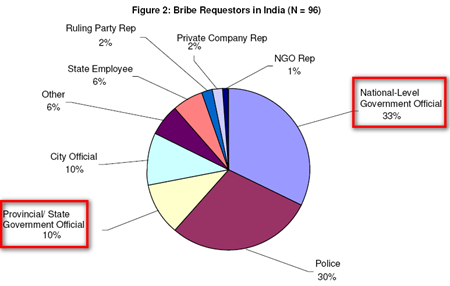
Bribe requestors in India
Today’s newspaper showed how RIL had been goofing the treasury department by quoting over hyped rate over the Krishna Godavari natural gas extraction and supply. The claims, that the license-raj devil can be wiped out by liberalization, proves to be just a lame tirade of the investors lobby. On the contrary what we are witnessing is pure puppetry. Just like how various corporate lobbys, pulling the strings of US policies, have shown how dependent corporates are on policy and law makers, every corporate house expects a corrupt government to be in place so that their monopolist intentions be well managed. We witnessed several high adrenalin protests against the politicians on 2G scam. The investigation reports did mention their names so they rightly deserves chappals and eggs, but the reports also mentioned the names of Reliance, Tata, Uninor and many well known corporate houses. Forget about high decibel cries, did we hear any word being spoken about these big shots in media or any other social gatherings or sites or forums? It could be imagined that Raja wouldn’t have sent out an email to all these chaps asking whether they want some spectrum. In the corporate world politicians are merely agents who gets things done for them, just like a middleman. If these middle men deserves stones and sticks, their employers deserves much more.


Imagine, if Anna Hazare asks the protesters to sell all the Reliance or Tata shares that they are holding, to protest against their corruption, how many of the corruption fighters would be ready for that? What are the chances that Anna Hazare gets tagged as a joker or something like that? Some might want to argue that, as they bring ‘development’ and all that nonsense, it is ok. So should this be interpreted as – I am ok for corruption as long as I am getting a cut out of it? My question is, whom should I slap first? :).


7.6.11

George Orwell & Animal Farm

In my opinion, nothing has contributed so much to the corruption of the original idea of socialism as the belief that Russia is a socialist country and that every act of its rulers must be excused, if not imitated. And so for the last ten years, I have been convinced that the destruction of the Soviet myth was essential if we wanted a revival of the socialist movement.

- Preface to the Ukrainian edition of Animal Farm, as published in The Collected Essays, Journalism, and Letters of George Orwell : As I please, 1943-1945 (1968)


It was only recently that I picked up the Animal Farm from the library, for reading. I had read two of his auto-biographical works ‘Homage to Catalonia’ and ‘Down and out in Paris and London’ and had ever been glued onto the Orwellian perspectives. Animal Farm is, as anybody would know, one of his most popular satire based on the Soviet union during the Stalin’s rule. As much the story is, interesting were the introduction and several prefaces that had been compiled over the book. And as the literary critics claim, this had been one of the daring satire on Soviet Union and highly misinterpreted book much to the sake of the cold war propaganda machines, which in fact contributed to its immense popularity.


George Orwell, born in Calcutta, left for England for schooling to come back later to Burma to join the Indian Imperial police. Having witnessed the ruthlessness of imperial police force he quits the job and leaves for England to concentrate on literary activities. Like many writers and poets did in those days, to free themselves from bourgeoisie culture, he decided to lead a ‘Bohemian’ lifestyle in a Parisian working class suburb in a tiny uncleaned room infested with bed bugs. He later spends a similar life style with the tramps of London. His Down and out in Paris and London comes from those adventures.  He later travels to Catalonia to fight along with Anarchists (Trotskyites), against Franco’s fascist forces during which he gets shot through his throat. His Homage to Catalonia accounts his adventures on the war front, commentary on the sophistications of a subaltern’s army and the betrayal of the Soviet supported allied troupe. In between the war, the idea of permanent revolution and the war of independence locked the horns of the Trotskyites and the Stalinists. Orwell believed in a socialism that promoted human freedom and a classless society which he found in Barcelona when it was under the control of the anarchists. Waiters never accepted tips, none address each others as senors or senoritas – they were all comrades. But then the Stalinists, who had been supported by the soviet union, wanted to postpone the revolution for the sake of war against the Franco, which they argued couldn’t go hand in hand as Trotskyites claimed. This later took an ugly turn when the Stalinists captured the Anarchists buildings leading to an internal crisis and bloodshed which ended in the persecution of the Trotskyites as traitors. The Stalinists were much ably equipped with arms compared to the Trotskyites, latter only armed with rifles that either explode when fired or are always jammed. Orwell though manages to escape the persecution, had to witness all his comrades getting captured and ‘disappear’. 


Europe, at that time was heavily influenced by the success of Russian revolution. It was, since the failure of Paris Commune, the proletariat government coming to existence breaking the cynicism of the right-wing world. The intellectuals, workers, peasants were all in the move to change the face of Europe. Labour parties and new leftist movements erupted throughout the world since then. Orwell after compilation of the Homage to Catalonia found it difficult to get the book published, which was then picked up by a pro-Trotskyites publishing company which gave much negative publicity to the book as it was conveniently made to believe a Trotskyite propaganda behind it. The idea of Animal Farm must have been in his mind ever since that incident. Orwell was surprised at the silence Britain was having against incorrect propagandas of the Soviet Union and on its contrary censorship move against any anti-soviet union literature. It was a situation where a criticism against Britain is tolerated while a criticism against Soviet union was not. He was annoyed that when the British press did wrote in detail about the famine in Bengal, they chose not to report the famine in Ukraine.  The Soviet Union, at the meantime, was improving ties with European nations through the workers union and intellectual circles which were having tremendous influence in the political arena as it would prove in later years at the emergence of socialist parties in Europe. Hence, after he compiled the Animal Farm there was no publisher ready to pick the work out of a fear of displeasure from the government. He quotes, the left leaning publishers were blind and wished to stay so while the right-wing publishers shied away quoting excuses like unavailability of paper and representing the head of the Animal Farm a pig. The only publishing company that came forward was the same Trotskyite leaning Secker and Warburg who published his Homage to Catalonia. Both the author and publisher was aware that this work might get criticized as a usual Trotskyite, anti-Stalinist literature hence that book was, after several delays, published post war as Animal Farm: A fairy tale.


This was, thus, initially promoted as a children’s book, much to Orwell’s annoyance. And since the end of World war and the beginning of the cold war, this book rose to immense popularity due to its childlike narration of history of modern Russia. As mentioned earlier, much to the irony of the original theme, this was then set to become part of the propaganda machines of capitalist block during the cold war, primarily United states. The prefaces of the American editions were largely botched, trying to convey that Orwell was actually writing against Socialism. Much of Ronald Reagan’s propaganda videos tried to replicate the imagery created by Orwell’s Animal Farm. An abridged version was later included as part of the children’s curriculum in schools as a lesson on the evils of socialism. It became a household name for utopian socialist society. Naturally the book was banned in all the soviet bloc’s as well as the countries on soviet alliance adding value to the myth. Though the original title had ‘A fairy tale’ written on it, that was taken out by many publishing companies later so that people don’t ignore it as a children’s book. Several right winged book reviews generously praised Orwell for his anti-communist intellect. Some even argued that this book received much acclaim purely due to its utility during the cold war time.

 
Much to the polarized state of the world during cold war period, a critical study of his work was not widely taken up due to its political influence. Interestingly it was children who alone took the book in its right sense. When spoke to some children, what they understood from the story was simply right, what Orwell wanted to say. The children spoke that they supported the animal farm when they overthrew the Mr. Jones as Mr. Jones was abusive and treated animals badly, while later, was saddened by how evil animals like the Pigs cheated and killed good animals like the horses, for power. There were many critics who question the usage of Animals taking control of the farm from Humans, as it portrays an unrealistic takeover. This picture was again used to convey a futility of a socialist system that it is inherently unstable. The true failure had nothing to do with the animals taking over the farm. In fact the story did proceed with the initial success of their farm through equality and hard work. Orwell states in his prefaces that his intention was not to project the takeover of farm by animals as a futile move but rather pin point the corruptibility  of power, that lead to the ultimate betrayal of the revolution. Looking at his writings and his accounts on days with anarchists, he probably favoured a liberal socialism with an inclination towards anarchism, out of his distrust on any ‘ruling’ system or ‘big brother’ susceptible to corruption (expressed in 1984).